Smart Calendar Hub
Full booking healthcare calendar app to manage providers’ schedules and booking appointments.
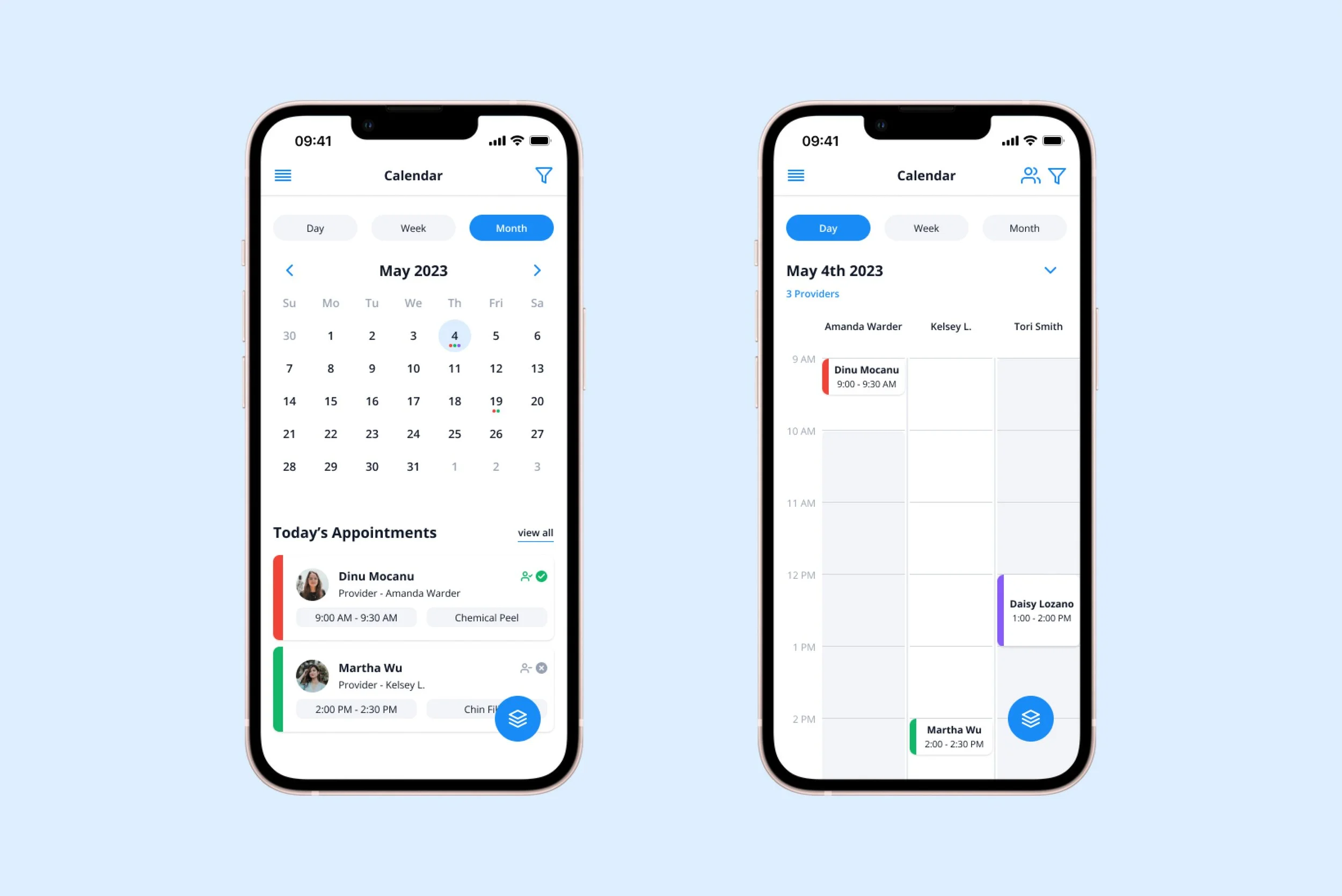
Role: Lead Product Designer I Team: 1 Designer, 1 PM, and 1 Developer I Timeline: 3 months
CONTEXT
Overview
Aesthetic Record is a HIPAA-compliant electronic medical record platform used by approximately 50 clinics to manage provider schedules and patient appointments in Medical Spas, Dermatology, Plastic Surgery, and Wellness Clinics.
I led the end-to-end redesign of the AR mobile calendar experience. The goal was to improve scheduling efficiency, reduce coordinator friction, and support clinic growth through better appointment management.
The redesigned feature was successfully shipped and integrated into the live application.
Problem
Across 6,000 clinics, 3–5 appointment coordinators per location manage an average of 30–50 patients daily. The outdated calendar features made it difficult to compare provider schedules, identify availability, and quickly book appointments.
This resulted in:
Delays in scheduling
Missed appointments
Miscommunication between staff and providers
Increased administrative burden
Because scheduling is a core operational workflow, inefficiencies directly impact clinic productivity and patient retention.
DEFINE
Understanding Goals
Partnered with the Product Manager to define measurable success criteria that would address these workflow gaps and guide decision-making throughout the redesign.
Business Goal: Increase patient acquisition and retention by improving scheduling efficiency across clinics.
User Goal: Enable appointment coordinators to quickly compare provider availability and book patients with minimal friction.
Framing Questions
To anchor the redesign, we aligned on a core question:
“How might we centralize provider availability to enable faster & conflict-free appointment booking?”
This ensured every decision improved visibility, reduced friction, and supported business growth.
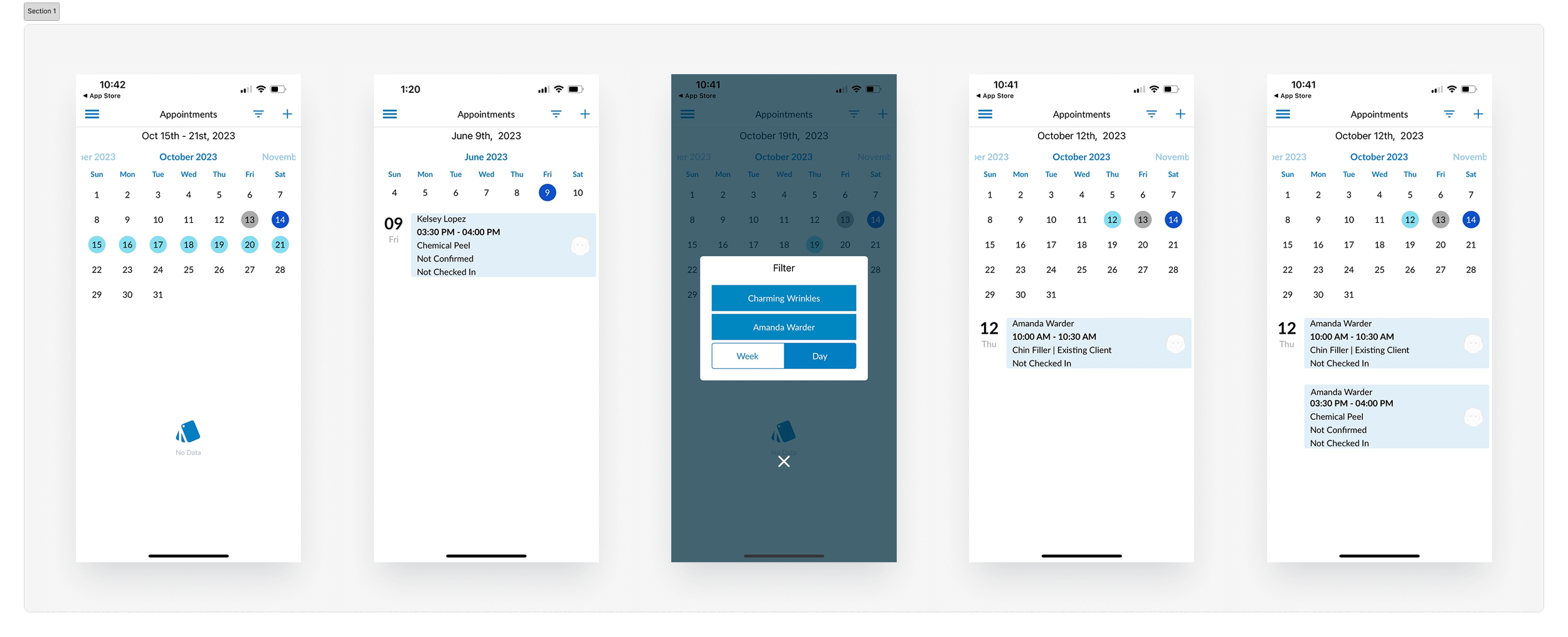
Legacy calendar experience showing fragmented views and limited visibility across providers, contributing to scheduling friction.
RESEARCH
Research Methods
To identify the underlying causes of scheduling friction, I synthesized quantitative and qualitative insights from clinic coordinators to prioritize structural improvements to the appointment workflow.
80 survey responses across 10 clinics
10 coordinator interviews
Competitive benchmarking of Google Calendar, Outlook, and Calendly
Survey Insights

Interview Findings
Lack of overall provider visibility
Poor differentiation between blocked and available time
Excessive navigation required for booking edits
The underlying issue was not feature absence — it was fragmented visibility and interaction friction.
DESIGN PRINCIPLES
Key Insights
From these findings, I synthesized recurring patterns into three key insights that shaped the redesign strategy.
1. Centralize Visibility: Provide a unified view of provider schedules to eliminate context switching.
2. Enable Fast Comparison: Allow coordinators to filter and compare multiple providers instantly.
3. Simplify Booking Management: Create a single destination for adding, editing, and managing appointments.

Primary persona used to ground design principles in real appointment-coordination workflows.
IDEATION
Prioritization & Tradeoffs
To balance delivery timeline with operational impact, PM and I have evaluated proposed features using a value vs. complexity matrix.

Prioritization matrix highlighting high-impact scheduling features selected for MVP.
We prioritized features that:
Reduced scheduling friction immediately
Centralized provider visibility
Improved booking accuracy
User Flow
Based on prioritization, we centered the redesign around the day view — the most operationally critical scheduling surface. Rather than redesign every view simultaneously, we refined the day view flow first, establishing a streamlined booking model that could scale consistently to week and month views.

Simplified day-view flow that anchored booking, filtering, and appointment actions across the calendar system.
DESIGN ITERATION
Design Approach
I translated key insights into multiple iterations and facilitated cross‑functional reviews with the CGO, product manager, and engineering team to validate direction and align on feasibility.
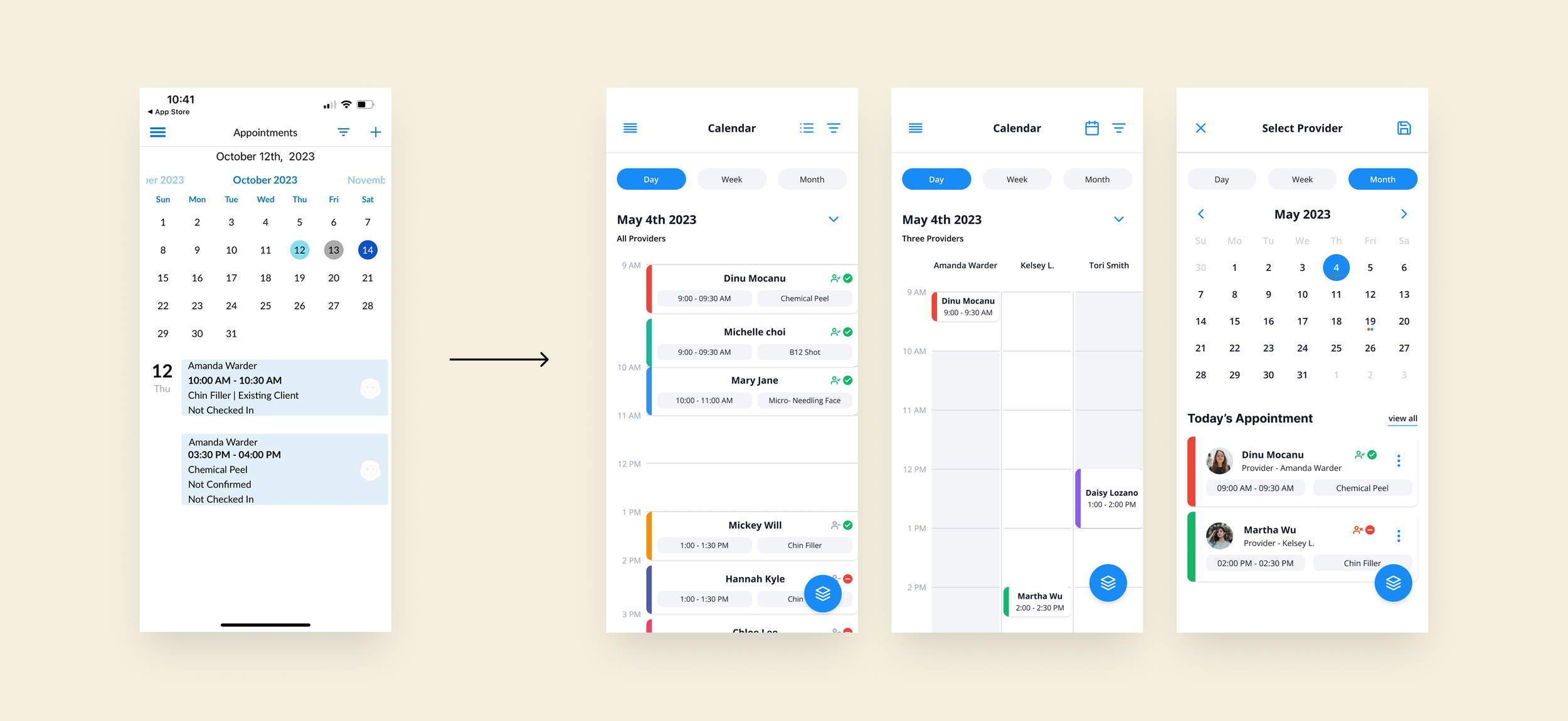
1. Calendar View Options
A unified, timeline-based calendar with day, week, and month views, which gives coordinators immediate clarity across provider schedules, reducing context switching and booking errors.
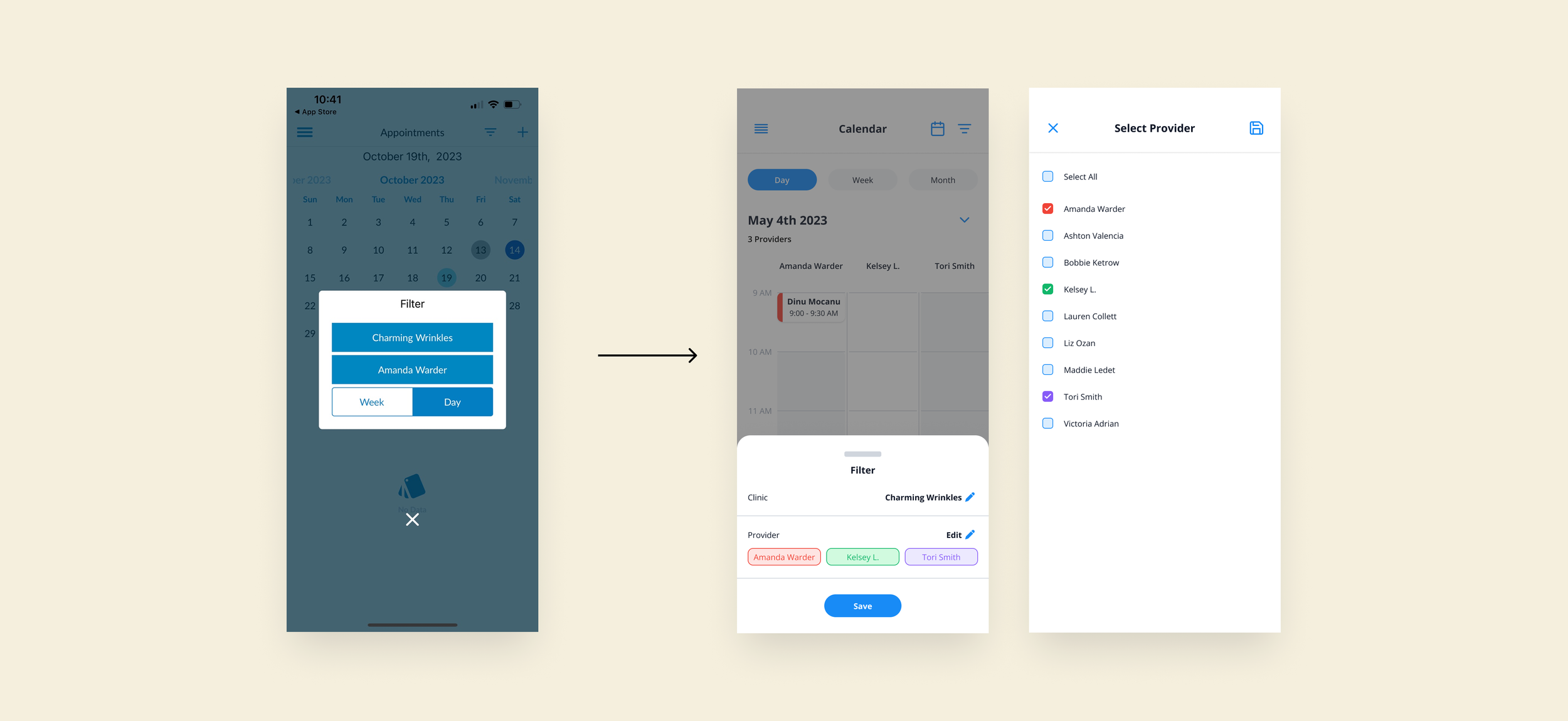
2. Advanced Filter System & Hotlink
Multi-provider filtering enables coordinators to instantly compare availability through advanced filters and quick links, accelerating patient-to-schedule matching.
3. Streamlined Booking System
A centralized booking workflow consolidates creation and edits into one surface, reducing interaction steps and operational friction.
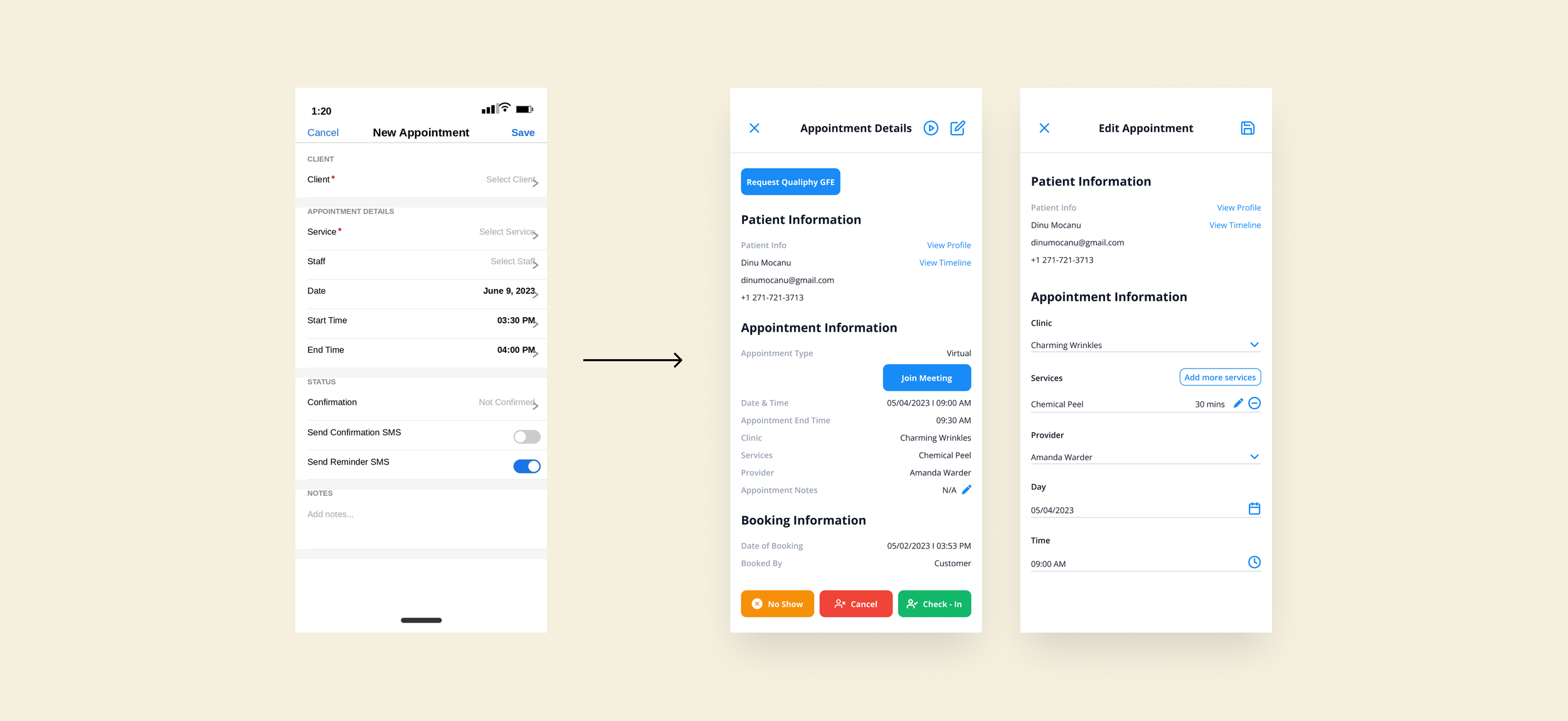
USABILITY TESTING
User Testing
I conducted usability testing with 6 coordinators to evaluate workflow clarity and task completion.
Testing Result
95% successfully completedbooking and filtering tasks.
However, 60% initially struggled to locate the provider list view.
50% found the filter process overly complex.
Improvements
Based on testing insights, I have created a final improvement to enhance the user experience.
Reduced multi-screen filtering interactions
Eliminated redundant confirmation steps
Introduced clearer iconography to improve discoverability
Simplified provider comparison workflow
1. Simplified Filter

2. Clear Navigation

SOLUTION
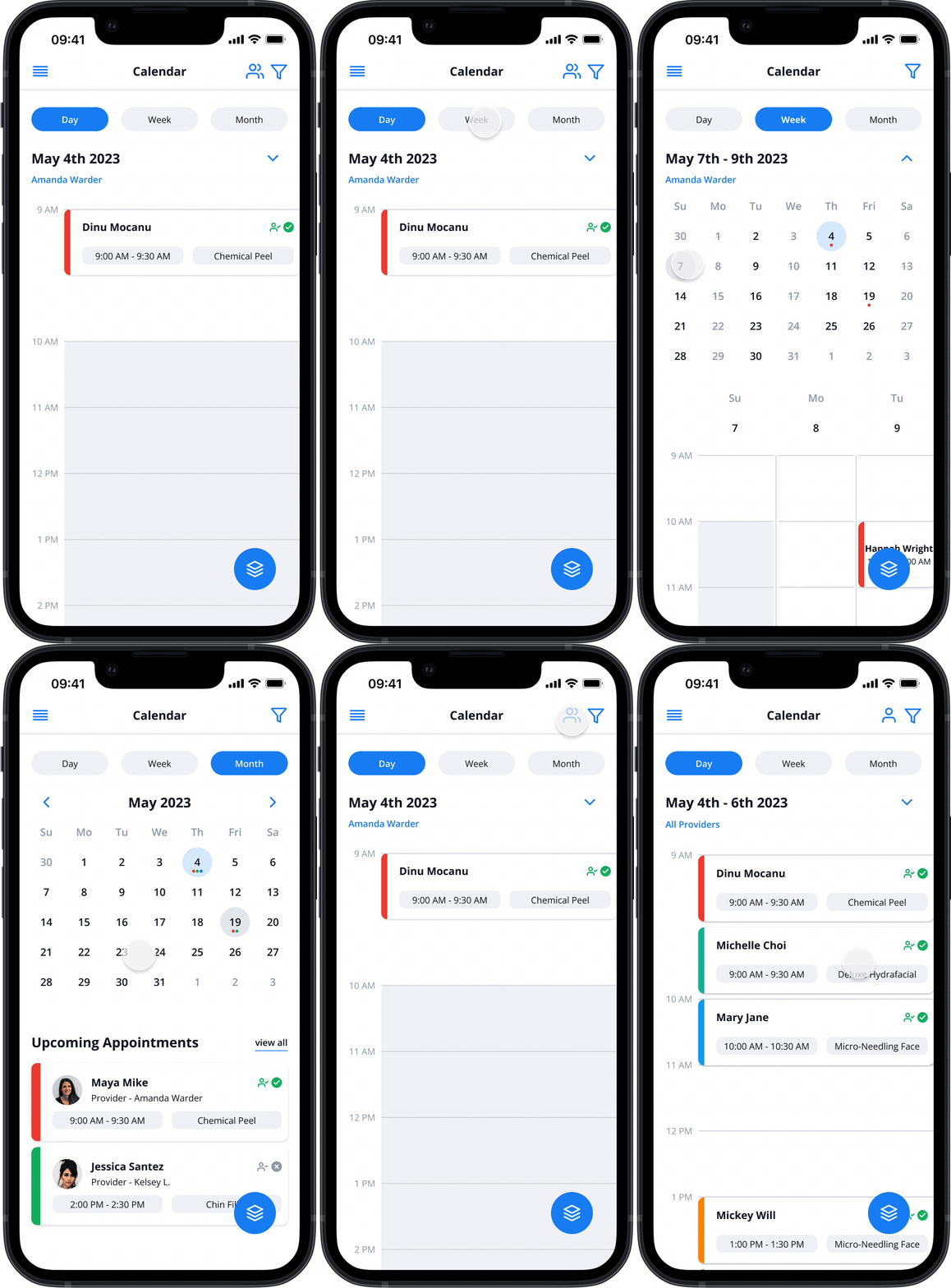
Calendar View Options
A unified calendar view centralizes provider availability through day, week, month, and list.
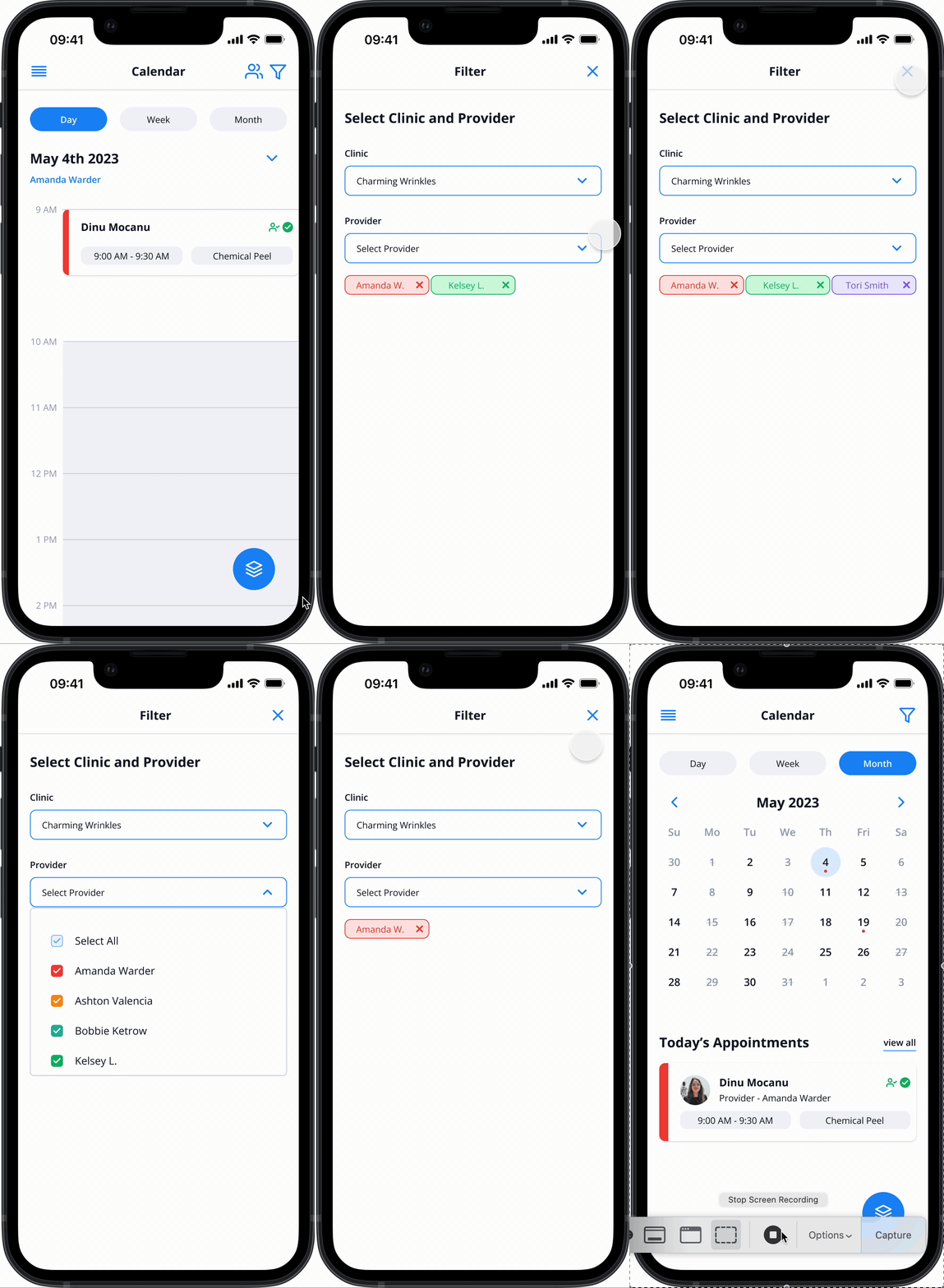
Advanced Filter System & Hotlink
An advanced filter and a quick filter link that enable faster provider comparison.
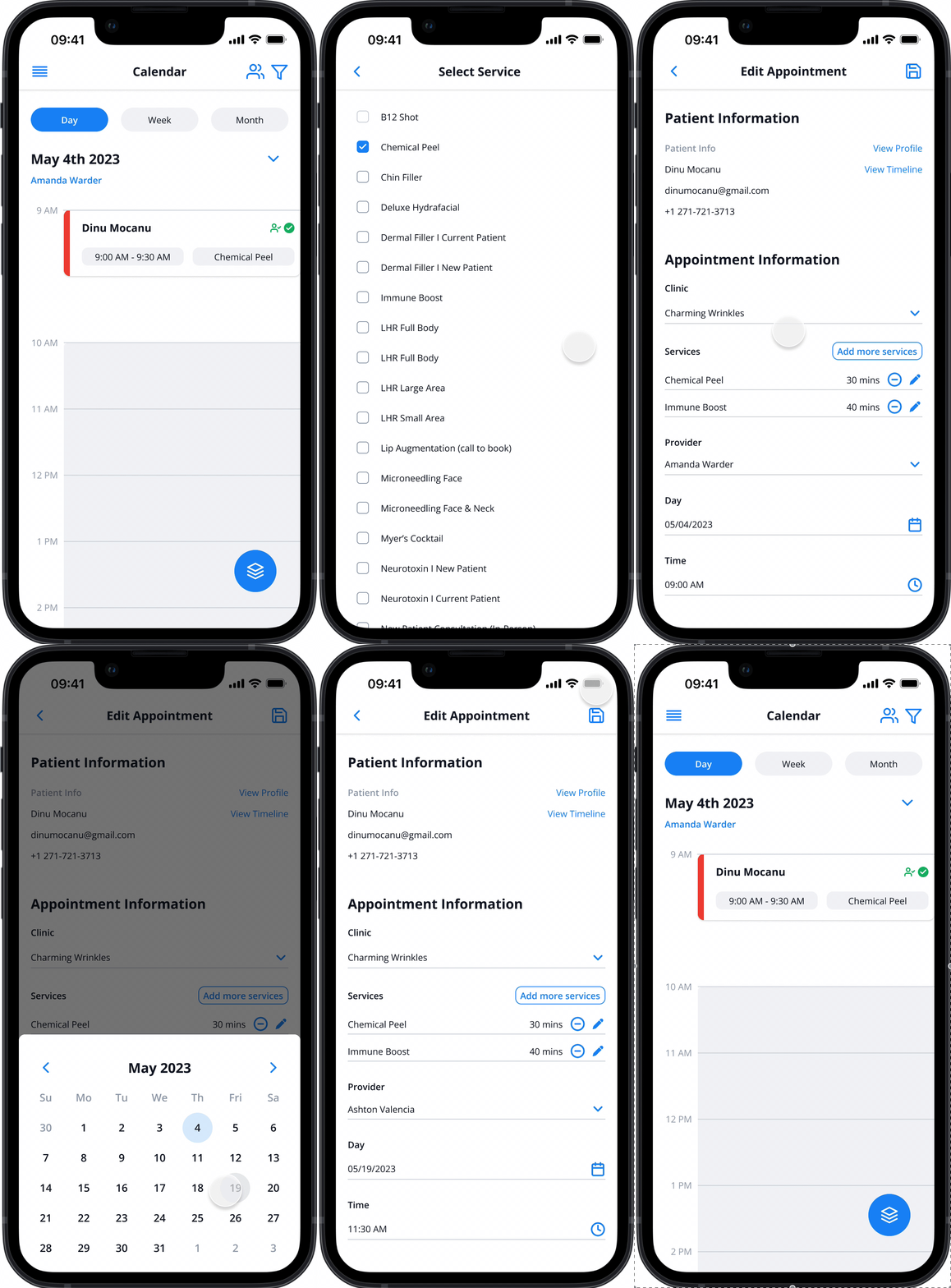
Streamlined Booking System
Add, edit, and manage appointments in one centralized workflow.
FINAL PRODUCT
Final Prototype
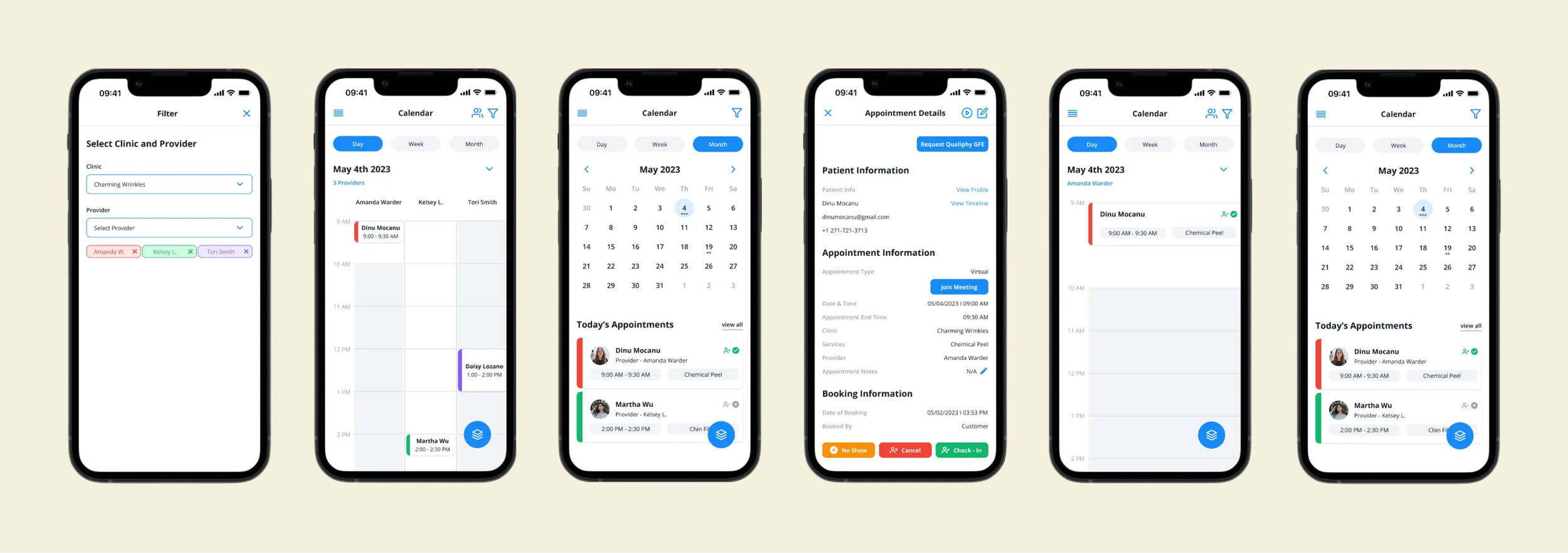
Below is an interactive prototype built in Figma. Feel free to explore the design by clicking the link below. Thank you ⬇
🎉 Impact
10% increase in new patient bookings within 83 days
Improved scheduling efficiency across clinics
4.3 / 5 coordinator satisfaction rating
Positive post-launch adoption across active clinics
This demonstrates measurable operational and business impact.
International Recognition
The project also received international design competition recognition:
Muse Awards I Design Master Prize I Creative Communication Awards I International Design Awards I Indigo Design Awards
Reflection
This project reinforced that operational tools must prioritize clarity and speed over feature density.
What I Learned
Centralized visibility reduces cognitive strain during peak workflow hours
Highlighting constraints prevents booking errors
Small friction points in administrative tools compound at scale